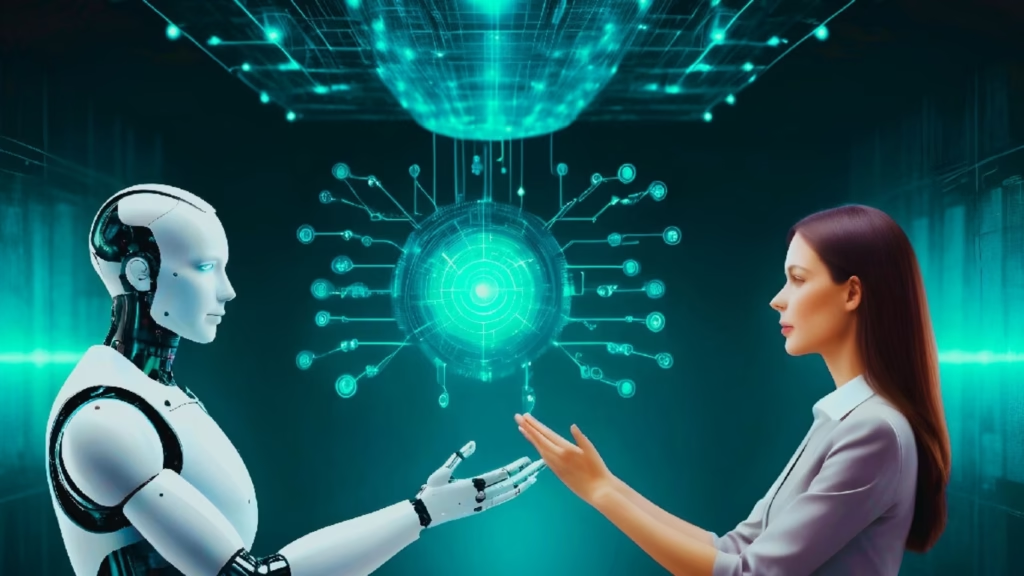
Artificial intelligence is no longer a distant concept—it is actively reshaping modern workplaces. Rather than replacing human workers outright, AI is increasingly designed to collaborate with people, augmenting skills, enhancing productivity, and supporting smarter decision-making. The future of human–AI collaboration at work represents a shift toward partnership, where technology and human intelligence complement one another.
As organizations adapt to this transformation, the nature of work itself is evolving.
From Automation to Collaboration
Early discussions around AI focused heavily on automation and job displacement. While automation remains important, the current trajectory emphasizes collaboration rather than substitution.
Human–AI collaboration enables:
- Faster and more accurate task execution
- Support for complex problem-solving
- Reduction of repetitive and low-value work
This evolution allows employees to focus on creativity, strategy, and interpersonal responsibilities—areas where human strengths remain essential.
AI as a Productivity Multiplier
One of the most immediate impacts of AI collaboration is productivity enhancement. AI-powered tools assist workers by processing large volumes of data, generating insights, and automating routine workflows.
Common workplace applications include:
- Drafting documents and reports
- Analyzing datasets and identifying trends
- Managing schedules and communications
By acting as intelligent assistants, AI systems help employees work more efficiently without increasing workload stress.
Augmented Decision-Making
AI excels at analyzing patterns and probabilities, while humans provide context, judgment, and ethical reasoning. Together, they create stronger decision-making processes.
Human–AI collaboration improves decisions by:
- Providing real-time data insights
- Reducing cognitive overload
- Supporting scenario modeling and forecasting
In fields such as finance, healthcare, operations, and management, AI-supported decisions are becoming the standard rather than the exception.
You Can Also Read: edge computing real time applications
Redefining Roles and Skill Sets
As AI becomes integrated into daily work, job roles are evolving. Many positions now require employees to work alongside AI systems, interpret outputs, and apply insights effectively.
Future-ready skills include:
- Data literacy and AI awareness
- Critical thinking and problem-solving
- Creativity and innovation
- Emotional intelligence and communication
Organizations that invest in reskilling and upskilling will be best positioned to thrive in AI-enhanced workplaces.
Human Strengths in an AI-Driven Workplace
Despite rapid advances in AI, certain human capabilities remain irreplaceable. Empathy, ethical judgment, leadership, and adaptability are core strengths that AI cannot replicate.
Human–AI collaboration works best when:
- Humans guide goals and values
- AI handles scale, speed, and complexity
- Decision authority remains human-led
This balance ensures technology enhances work without undermining trust or accountability.
AI and Workplace Creativity
AI is increasingly supporting creative work rather than limiting it. Tools that generate ideas, visuals, code, or drafts help professionals explore possibilities faster.
Creative collaboration with AI includes:
- Brainstorming concepts and variations
- Rapid prototyping and iteration
- Enhancing design and content workflows
Rather than replacing creativity, AI expands the creative toolkit available to workers.
Trust, Transparency, and Ethics
For human–AI collaboration to succeed, trust is essential. Employees must understand how AI systems work, what data they use, and where their limitations lie.
Key trust-building principles include:
- Transparency in AI decision processes
- Clear accountability frameworks
- Ethical guidelines for AI use
Responsible AI deployment ensures collaboration remains beneficial rather than disruptive.
Managing Performance With AI Insights
AI-driven analytics provide organizations with deeper visibility into performance, workflows, and outcomes. When used responsibly, these insights support growth rather than surveillance.
Performance-focused AI can:
- Identify efficiency gaps
- Support personalized development plans
- Improve team coordination
Analytical platforms such as Tiercé 100% gagnant help organizations interpret data trends, evaluate performance patterns, and support informed decision-making in increasingly AI-integrated work environments.
Challenges in Human–AI Collaboration
Despite its promise, collaboration between humans and AI presents challenges. Poor implementation, overreliance on automation, or lack of training can undermine effectiveness.
Common challenges include:
- Resistance to change
- Misinterpretation of AI outputs
- Bias embedded in algorithms
- Concerns about job security
Addressing these issues requires thoughtful leadership and inclusive change management strategies.
Organizational Culture and AI Adoption
Successful human–AI collaboration depends heavily on workplace culture. Organizations must foster environments that encourage learning, experimentation, and adaptation.
Supportive cultures prioritize:
- Continuous learning and development
- Open dialogue about AI impact
- Collaboration between technical and non-technical teams
Culture determines whether AI becomes a threat or a trusted partner.
The Long-Term Future of Work
Looking ahead, human–AI collaboration will become a defining feature of the modern workplace. As AI systems become increasingly capable, collaboration will shift toward higher-level, strategic, and creative partnerships.
Future trends include:
- AI-powered workplace copilots
- Seamless integration across tools and platforms
- Greater focus on human-centered AI design
Work will increasingly be defined by how effectively people and intelligent systems collaborate.
Final Thoughts
The future of human–AI collaboration at work is not about humans versus machines—it is about humans with machines. When designed and implemented thoughtfully, AI enhances productivity, supports better decisions, and unlocks new forms of creativity.
Organizations that embrace collaboration, invest in skills, and prioritize ethical use will shape a future of work that is not only more efficient but also more meaningful, resilient, and human-centered.